
Andy Burnham: a new dawn?
July 18, 2026
Can Andy Burnham Deliver Change?
Andy Burnham recently stood down as Mayor of Greater Manchester to stand in the Makerfield by-election (triggered by the previous MP, Josh Simons, specifically so Burnham could run – we’ll come back to that later) with the promise that should he succeed, he would challenge Keir Starmer for the Labour leadership. Burnham would storm to victory, taking 54.8% of the vote off the back of a campaign of hope and optimism in which he decried Thatcherism and declared that the London bubble had ignored the north and areas like Makerfield for too long, soundtracked by the likes of Oasis and James. But Burnham has had a long political career, beginning when he was first elected as an MP in 2001, and he’s taken many different political positions over the years. So, who is the real Andy Burnham? Does he represent genuine change, or more of the same ‘plain Labour’ that’s gotten us into this mess? Let’s take a look.
Manchesterism
One consistent throughout Burnham’s political career is his support for further devolution. As an MP and regional mayor, Burnham has experienced political life in and out of Westminster. The ‘London bubble’ is a real thing. The capital is, after all, where the majority of the country’s money, jobs and opportunities are located, and the rest of the country has fallen by the wayside to some extent. Burnham’s vow to devolve further powers to Scotland, Wales and Northern Ireland, as well as his idea to install a ‘No. 10 North’ in Manchester to oversee increased regional control of areas such as housing and transport, is a clear indication that regional disparities will be addressed by his incoming government. Giving neglected areas more power to manage their own affairs, with support from London, will give these areas the leg up they need.
Burnham’s criticism of Thatcherism as the root of all the country’s ills is cynically brilliant. Is it blatant populism? Yes, of course it is. Is it also a breath of fresh air that a politician finally calls out the damage she did? Also yes. It is an incredibly important conversation that needs to be had. Deregulation, deindustrialisation, getting into bed with brutal dictators, cosying up to the US at their worst moments – these are the problems that successive governments have either failed to tackle or chosen not to tackle at all, which is what’s led us to where we are now. Burnham talks a good game, and he’s gotten the diagnosis of the problem right. Now, it’s about whether he can actually solve it, or at least lay the foundations to undo over forty years of damage.
To this end, Burnham has advocated for what he calls ‘greater public control’ of utilities such as water and rail. (Note how he hasn’t advocated for full nationalisation.) He cites taking back public control of the Manchester bus network as his proudest achievement as mayor. We all know how dreadful trains in the UK are – expensive, slow, unreliable, Trainline charging ridiculous ‘admin fees’ on refunds. Keir Starmer has already taken some train services back into public ownership. Burnham can build on this by continuing plans to nationalise British Steel, and has already made noises about taking Thames Water into public ownership. The environmental damage done to our rivers and seas by water companies dumping raw sewage, as a result of deregulation, is well documented (see the incredible based-on-real-events miniseries Dirty Business on Channel 4 to learn more about it – would thoroughly recommend). If public ownership delivered tangible improvements to public services, then it would dispel the myth that the market knows best, deliver improved standards to customers and curb exploitative practices.
The final, most important change I think we need to talk about regarding Prime Minister Burnham is his proposed tax changes. Most significantly, he has suggested scrapping council tax and stamp duty, both of which are roundly despised and replacing it with a ‘land value tax’. LVT has long been part of Burnham’s policy platform – he advocated for it in both his previous attempts at the Labour leadership, in 2010 and 2015 – the principle being that it taxes the value of land rather than the buildings on it, whilst council tax and stamp duty tax the value of a property itself. Burnham describes himself as an ‘aspirational socialist’, and has referred to council tax as a ‘regressive’ measure. LVT would shift the tax burden away from those that want to move up in life, as they would no longer be paying an additional tax to move house, and the slack would be picked up by landowners, who are predominantly wealthy. The thinking goes that LVT would also encourage landowners to develop or otherwise sell land that has otherwise been unused. This forms part of a more general push by Burnham to increase taxes on the wealthy, as well as his proposed housebuilding programme which he says will be the biggest since the Second World War. At face value, LVT is a win-win for all involved.
A Blairite, a Brownite, a Milibandite and a Corbynite walk into a bar…
Burnham has brought lots of fresh new ideas into the political arena, but to assess where he’s going, it’s also worth assessing where he’s come from. He’s had a long political career, beginning when he was first elected as an MP in 2001, and he served under four different Labour leaders. He moved from a minister under Tony Blair to health secretary under Gordon Brown, a brief he retained in Ed Miliband’s shadow Cabinet, and then a short stint as Jeremy Corbyn’s shadow home secretary before resigning in 2017 to stand for the mayoralty of Greater Manchester. All this is to say, he’s a somewhat chameleonic figure – he served comfortably under Blair and Corbyn, who within the context of the Labour Party are about as far apart ideologically as it’s possible to be. He’s called for the UK to reduce the welfare bill, but consistently voted against Conservative austerity measures as an MP. He’s consistently argued for LVT, but decried Ed Miliband’s ‘mansion tax’ as the politics of envy. He’s stated that he supports the ‘broad thrust’ of Home Secretary Shabana Mahmood’s harsh immigration measures. He advocates for ‘greater public control’ of key industries without using the word ‘nationalisation’. Inconsistency is to be expected from most politicians, but all this is to say, Burnham isn’t as different from Keir Starmer as he portrays himself. Is he as unscrupulous? I don’t believe so. I think there is some merit to the idea he’s a pure Labour man more loyal to the party than to any leader.
In many ways, Andy Burnham could be considered a more charismatic, presentable Ed Miliband. In his time as leader, Miliband projected a more left-wing image following the fall of New Labour, arguing for wealth taxes and protecting areas of public spending from Tory austerity whilst also taking a hard line on immigration and suggesting that should Labour win in 2015, some spending cuts would have to be maintained. Burnham has taken many of these concepts and carried them forward. My point is, he can’t be put on a pedestal, and his attempts to put himself on one as the ‘King in the North’ might not be such a good idea if he wants to sustain his popularity.
Will we find the bright of day?
For all Burnham’s attempts to portray himself as a force for positive change, in many ways he’s still cut from the same establishment cloth as his predecessor. Take his associations with Labour Together, the cult that made and broke Keir Starmer. As mentioned earlier, Burnham’s predecessor as Labour MP for Makerfield was Josh Simons, who served as chair of Labour Together until his election as an MP in 2024. Labour Together were, of course, the shadowy organisation that contributed to the downfall of Jeremy Corbyn and essentially wrote Starmer’s policy platform. Labour Together are behind Labour’s lurch to the right under Starmer, which has involved scrapping winter fuel payments and the infamous ‘island of strangers’ speech, and has failed in its attempts to attract Reform and Conservative voters to Labour whilst driving away the left-wingers that the party takes for granted. Simons was chair of Labour Together when the group commissioned investigations into journalists who were investigating the group’s donations and their failure to declare them to the Electoral Commission. It begs the question: why would a major figure in the organisation that built Starmer turn against his poster boy to make way for someone that made his leadership ambitions clear from the outset? Is Burnham an opportunity for Labour Together to rebuild and rebrand themselves? This question is made all the more pressing by Wes Streeting, the darling of the Labour right, who resigned in dramatic fashion from the Cabinet and declared that he’d be challenging Starmer for the leadership. That commitment lasted all of two minutes, as he would endorse Burnham for the leadership after Makerfield. Worth asking if there’s some kind of deal between the two for when Burnham takes the top job.
The obvious elephant in the room when it comes to Burnham is his stance on Israel. This is well-documented; he was a long-time member of Labour Friends of Israel and in his 2015 leadership bid, he declared his first foreign trip as Labour leader would be to Israel. Following his re-election as an MP, he’s rowed back on his pro-Israel advocacy. He’s apologised for Labour’s previous actions regarding Gaza – supplying the IDF with weapons and being too slow to recognise Palestinian statehood – and condemned the Israeli government and military’s atrocities in the region, whilst also acknowledging the reality of increased anti-Semitism in the UK as a result. In essence, he’s recognised suffering where it exists, without privileging one group over another. This is good. However, two problems remain. Number one: Burnham, like most leading politicians, hasn’t shown the mettle to call Israeli actions what they are: genocide. Any public figure worth their salt who genuinely wants to condemn Israeli actions in Gaza can only do so meaningfully if they recognise them as a genocide. For some reason, calling a spade a spade is seen as an act of courage in 2026. And problem number 2: Burnham has appointed James Purnell as his chief of staff. Purnell is a former Labour MP who chaired Labour Friends of Israel and has gone on to head a lobbying firm, Flint Global, that represents tech giants and arms companies, many of whom have done rather well out of the genocide. I would like to clarify at this point that I’m not accusing Purnell of anything or saying he is complicit in Israel’s war crimes in any way; I’m only pointing out that Burnham’s newfound criticisms of Israel ring quite hollow when considering who he chooses to advise him.
Israel/Palestine is not the only illegal war on which Burnham has a questionable record. In 2003, he was part of a minority of Labour MPs who voted for the invasion of Iraq. By all accounts (I wasn’t alive at the time), New Labour’s disinformation campaign trying to convince the public that the war was a good idea was quite effective, so perhaps one can’t blame Burnham too much for getting sucked into supporting it as a new MP trying to make his mark. What one can blame him for, however, is for voting against an inquiry into the Iraq War. It’s impossible to know what Burnham knew and when (or if he knew anything at all). But let’s consider the facts – there were no weapons of mass destruction, there were no credible connections between Saddam Hussein and al-Qaeda. Iraq was a war waged under completely false pretences, concocted by the government of Tony Blair and sold to the public through propaganda. To have supported it and then voted against an inquiry into it is a major blemish on Burnham’s record. Burnham has since expressed regret at supporting the Iraq War, but regret will not undo the damage done, and he must bear responsibility.
A message to the left
I want to conclude with a message to the British left, to those like me that support Burnham and those that really don’t. I’ve seen a lot of discourse online about what supporting Andy Burnham actually means, and one perspective I’ve seen is that he simply represents more of the status quo and not the radical change he projects. That is not an unreasonable position, and I’ve presented evidence in this piece that supports that idea. Where I struggle is when people say that one can’t truly be left-wing if they support Burnham because he represents the same status quo and will ensure that Reform or whichever far-right party is popular at the moment (I lose track) will win. I feel at this point that I need to offer a reality check to some people. In the nicest way possible, you’re not going to get what you want, at least not immediately. The party you support (generally the Greens) are not going to win the next election. They might do well – I hope they do – but they don’t have enough popular support to jump from five seats to a majority in Parliament. The change you want to see will not happen overnight. For the left to win, change must be incremental. How do you achieve this? By being pragmatic. Burnham is best-placed to defeat Reform in 2029 because he is a relatively popular figure with some big, bold, exciting ideas. It is our job to support him and put pressure on him as citizens and voters to ensure he follows through. If he doesn’t, then we’ll all go and vote Green.
Keir Starmer got a lot wrong, but when he said in a 2016 New Statesman interview that choosing ideological purity before power was ‘a dereliction of duty’, he really was onto something. We all want to keep Reform and the far-right out, but we’re our own worst enemy when we choose not to support those in the best position to do it because they’re not unimpeachable lefties with a stellar record of saying all the right things and making all the right choices. There’s no such thing as perfection. Accept that, settle for less, and then maybe you can get what you want in the long term. That’s the way life is, quite frankly. Don’t let idealism get in the way of reality, or we’ll end up with a Reform government.
Conclusion
The overarching question I want to ask is: will Andy Burnham make a positive difference as prime minister? I want to think so. He has a lot of good ideas and says a lot of the right things, whilst portraying an authenticity that Keir Starmer never could. He also has that all too rare quality amongst politicians of being able to admit when he’s got something wrong and apologise for it. I do wish he’d show more courage in his convictions regarding Gaza and nationalisation and I do worry that him surrounding himself with the likes of Purnell and Streeting will cause him to stray from the path he’s set out, but I think there might be just enough about him to rebuild Labour’s fortunes and keep Reform out. He’s got the potential to be the man the country needs to get out of its rut. All this is said with a degree of scepticism, but a healthy scepticism; dare I say it, an optimistic scepticism. And if nothing else, the guy has an impeccable taste in music. He’s got my support for being a fan of The Smiths. Everything else is a bonus.

More from Underline
July 26, 2026
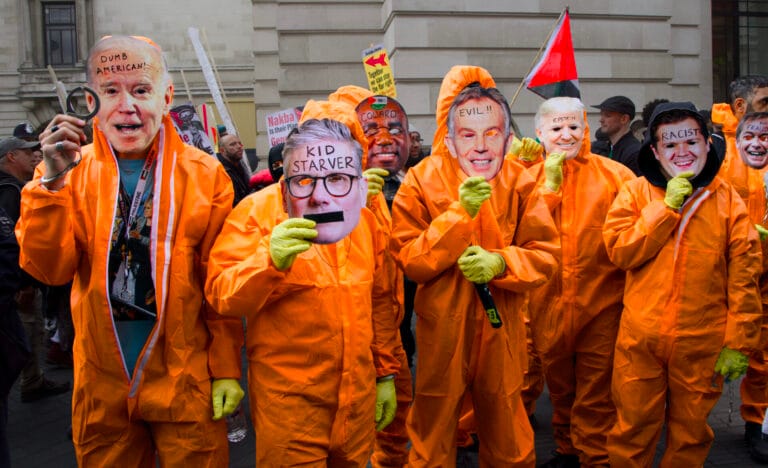
Keir Starmer: A Divisive Legacy
Alberto Alessandro examines Keir Starmer's approach to Gaza, exploring why many critics believe it became one of the defining moral and political failures of his premiership.

September 4, 2026
Trails Upon The Rolling Mountains
A hike outside Santander goes increasingly off course, as Ayoor encounters steep climbs, ticks, vultures, questionable navigation and, worst of all, no coffee.

September 25, 2026
Normal Stuff – By Lorry (BTS)
Back in July, I was filming a music video in collaboration with Lorry & PB. Who takes inspiration from UK alternative HIP-HOP/Jazz rap and Neo-Soul.
